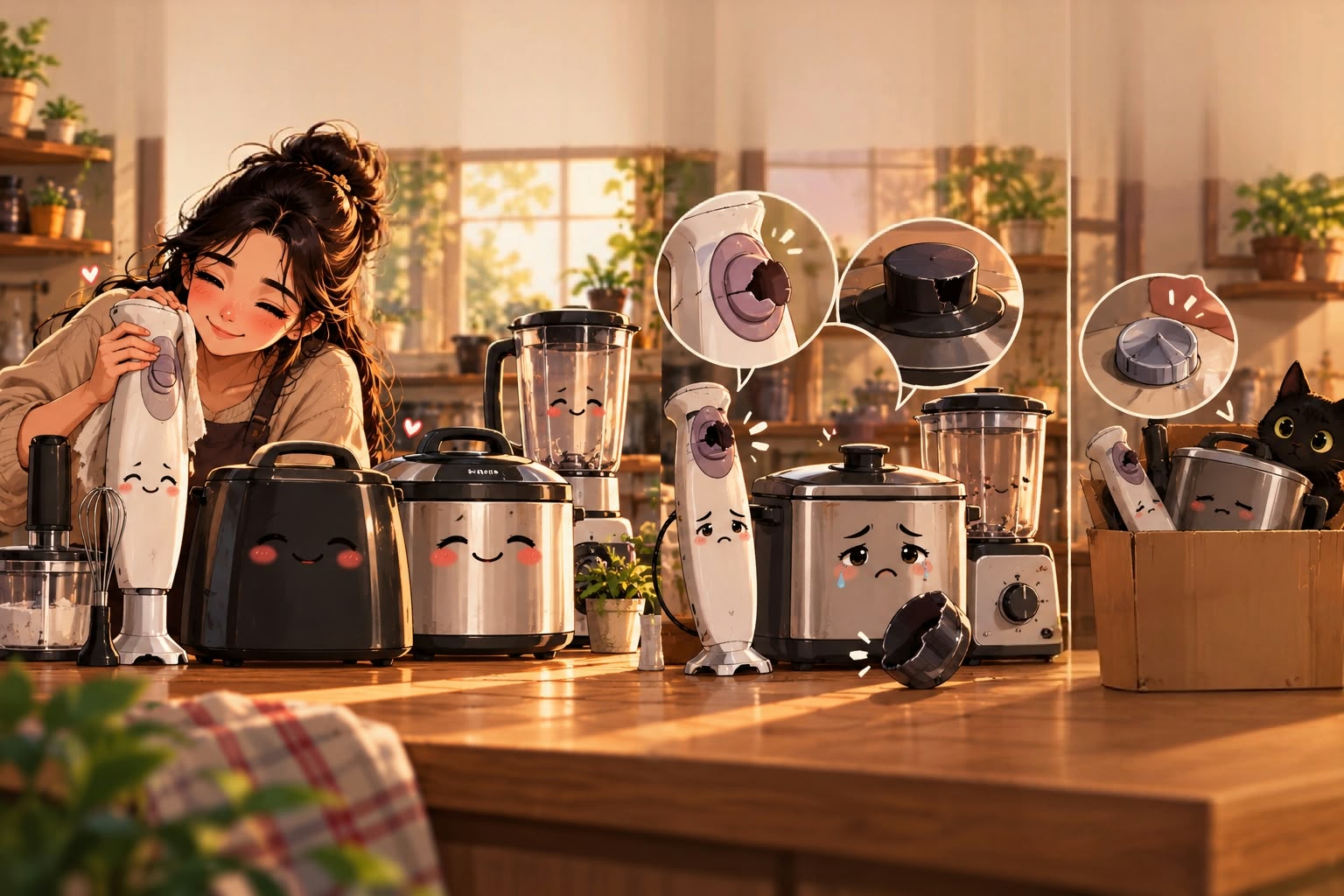
I think I mentioned this before, when I told you about my washing machine—the one that refuses to
die, even after ten years.
At the time, I thought I had ended
up with a "super" washing machine (it’s still running today!).
Naturally, one’s first thought would be that it must be of high quality, right?
The Washing Machine that refuses to die
Well, that may be true, but
taking good care of household appliances—and being mindful of how you use
them—definitely helps extend their lifespan, especially when the product is
high-quality to begin with.
I’m not talking about poor-quality
appliances—the kind that seem like they’ll quit after just one or two uses. For
those, no amount of care will help; they’d need a miracle.
As I’ve said before, I don’t replace
appliances that still work to get something with better features or
a more attractive design. In truth, it’s a kind of loyalty I feel toward the
tools that have served me and hold my memories.
However, I’ve discovered something I
hadn’t realized before—or perhaps I had, but others around me had pointed it
out so often that I hadn’t paid it much mind. It only struck me now, ten years into using my blender, when I couldn't source a specific plastic part.
The product is locally made, and
after all this time, certain parts are no longer available. It makes
me wonder: am I perhaps *too* careful with these machines—to the point where a
plastic component reaches the end of its life while the motor is still going
strong? This is not the first time a plastic part has let me down. The previous
one lasted five years—not because of any negligence on my part, but because that seems to be its actual lifespan; it broke under the pressure of use.
(How did I conclude that was its natural lifespan? Well, five years later, it
broke again!)
I recall once buying an electric
cooking appliance—not a locally made one—where, through constant use, the
removable inner pot lost its protective granite (or perhaps Teflon—I don’t
quite remember) coating. Despite my best efforts, I couldn't find a replacement pot, so—regrettably—I had to get rid of the entire appliance, even though the motor still worked.
Drawing from these kitchen
experiences—and as I currently look for a new blender—I’ve decided to share a
piece of advice or two with you:
First: When buying a new appliance,
look for a reputable, well-known brand. It doesn’t have to be expensive, but it should at least be recognized for quality materials and craftsmanship. Do your research, seek advice, read reviews, or
perhaps even ask an AI.
Second: Consider buying a locally
manufactured product. It will likely be more affordable, and you’ll have a
better chance of finding spare parts—at least for a while—before the product
and its components eventually disappear from the market. Plus, a well-made
product can last a long time if you care for it properly.
Third: Yes, a product made in a country known for high-quality goods might seem tempting—as if it could last a century—but that’s rarely the case. Every product has a finite lifespan; even with the utmost care, it will end. When a pot rusts or a small plastic component shatters, even the best motor in the world won't help.
Fourth: Take care of your tools. Do not expect any product or appliance—no
matter how well-made—to last long if you toss it around, leave a metal spoon
inside it, or place it near a heat source or water. At the end of the day, it
is just an appliance; no matter how high-quality, it is not indestructible.