Silent
Comedy
During the
silent film era, which lasted for nearly thirty years, almost all types of
films emerged, and some matured. Among them, comedy came first. It has been
noted that theatrical traditions influenced cinema in its early years.
This also applies to the comedy genre. Many comedic styles that originated in
circus performances, vaudeville, and music halls were transferred to film; however, they were enriched by cinema's possibilities over time.
It is worth
noting that comedy played a significant role in establishing cinema as an era. It was inevitable that cinema would embrace comedy from its earliest
days, as it addressed the unemployed, children, and the lower classes.
The quality
of the first short comedies meant that those who already despised
cinema showed no interest in them. Despite their popularity, comedies were not
taken seriously for a very long time.
The 1920s
saw the emergence of comedy subgenres in response to social
changes. During this period, artists such as Buster Keaton, Harold Lloyd, and
Charlie Chaplin paved the way for comedy films to become works that could be
discussed and respected. Now, comedies featuring scrambles, trampling, falls,
and even violence, set in a fantasy world, began to fade into the background.
They were replaced by comedies based on real-world events—satire that aimed not
only to make people laugh but also to convey a message.
Over time,
good comedic content emerged in sitcoms alongside vulgar comedy. These were
based on jokes created around a situation that unfolded unexpectedly and
offered an important lesson.
Sir Charles
Spencer Chaplin
Charlie
Chaplin is one of the artists who brought comedy into the real world. Chaplin
was an artist who replaced the mechanical man with the ordinary human being,
transforming his desires, emotions, and attitudes arising from his social
relationships into comedic material, and using comedy to establish a new
connection with the audience. With his iconic character, the Tramp, he first
used visual jokes based on deception rather than vulgar comedy, ensuring that
humor was taken seriously and respected as a literary genre. Chaplin, who began
his career as a mime artist by joining a renowned circus troupe at the age of
seventeen, caught the attention of Mack Sennett during his 1912 American tour
with the same troupe. He joined Keystone in late 1913. He portrayed a poor,
vagrant character who looked up to the nobility.
.jpg)
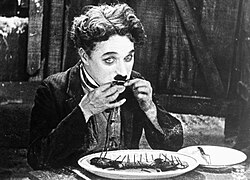
Chaplin stood before the camera dressed as the villainous "Little Man," staring directly at the audience. In his later films, Chaplin
would turn to look at the camera, thus establishing a closer connection with the audience. It was also clear that the majority of Chaplin's audience consisted of children and ordinary people.
Both *The
Gold Rush* (1925) and *The Circus* (1928) proved that his feature films were as
excellent as his short films and were well-received by audiences. Chaplin was
long opposed to sound films, as he felt the sound clashed with his sense of
humor and the acting technique he employed. However, in his early sound films,
*City Lights* (1931) and *Modern Times* (1936), he successfully used sound as a
contributing element to comedy. These films, which incorporate sound effects,
some dialogue, and music, are considered Chaplin's masterpieces.
Chaplin, who
made films at various intervals during the sound era, satirized Nazism and
Fascism in films like *The Great Dictator* (1940) and called for brotherhood
among humanity.
Other
Chaplin films were boycotted, but this was the first time such a powerful and
widespread backlash had occurred. A climate of intense hostility toward him
emerged, effectively ending Chaplin's career in the United States.
In the 1920s, reactions such as suicides, suspicious deaths, and drug use increased, leading to the perception that Hollywood films were morally corrupting. Intensive propaganda began, claiming that Hollywood was corrupting American society, and a powerful public opinion was formed. As a result of lobbying efforts, studio executives united around the idea that Hollywood needed self-regulation to prevent direct political interference and protect their commercial interests. Thus, in 1922, they founded an organization called the Producers and Distributors of Motion Pictures of America, later known as the Hays Office, a unique form of censorship that continued into the 1960s.
His films
*Modern Times* and *Môsô Verdu* fueled claims that Chaplin was a communist, and
in the late 1940s, the House Un-American Activities Committee summoned him to
testify on the matter. Upon receiving news that he would be prosecuted for his
sympathies and moral depravity, he decided to settle in Switzerland, where he
attended the premiere of *Limelight*.
He returned
to the United States, which he had previously declared he would "never set
foot in again," to accept his second Academy Award in 1972. He was
knighted by Queen Elizabeth in 1975. Charles Chaplin died in 1977.