Europe's dominance of the global film market began to falter from 1905 onwards and vanished entirely with the outbreak of World War I. Meanwhile, Hollywood films conquered audiences and theaters in every country with their technology, stars, and spectacular promotional campaigns.
Towards the Hollywood Studio System
and Film Production
Beginning in 1915, studios entered a
race to own theaters. As these studios became more established and powerful,
they bound famous actors and talented directors to contracts and sought ways to
ensure that all the films they produced were shown and could be rented in bulk. Over time, the large studios swallowed up the smaller ones that
lacked a chain of large theaters.
Thus began a new era in America,
called the studio system, which would continue well beyond World War II. The
film industry was completing its monopolistic organization both horizontally
and vertically. By the mid-1900s, the most important problem for the companies
was keeping profits on their annual balance sheets. The studio system consisted
of five major production companies known as the Big Five in Hollywood from the
1920s until the late 1940s.
These companies sought to dominate
the market by controlling production, distribution, and exhibition. They were
Paramount Pictures, Metro-Goldwyn-Mayer (MGM), Radio-Keith-Orpheum (RKO),
Warner Brothers, and 20th Century Fox.
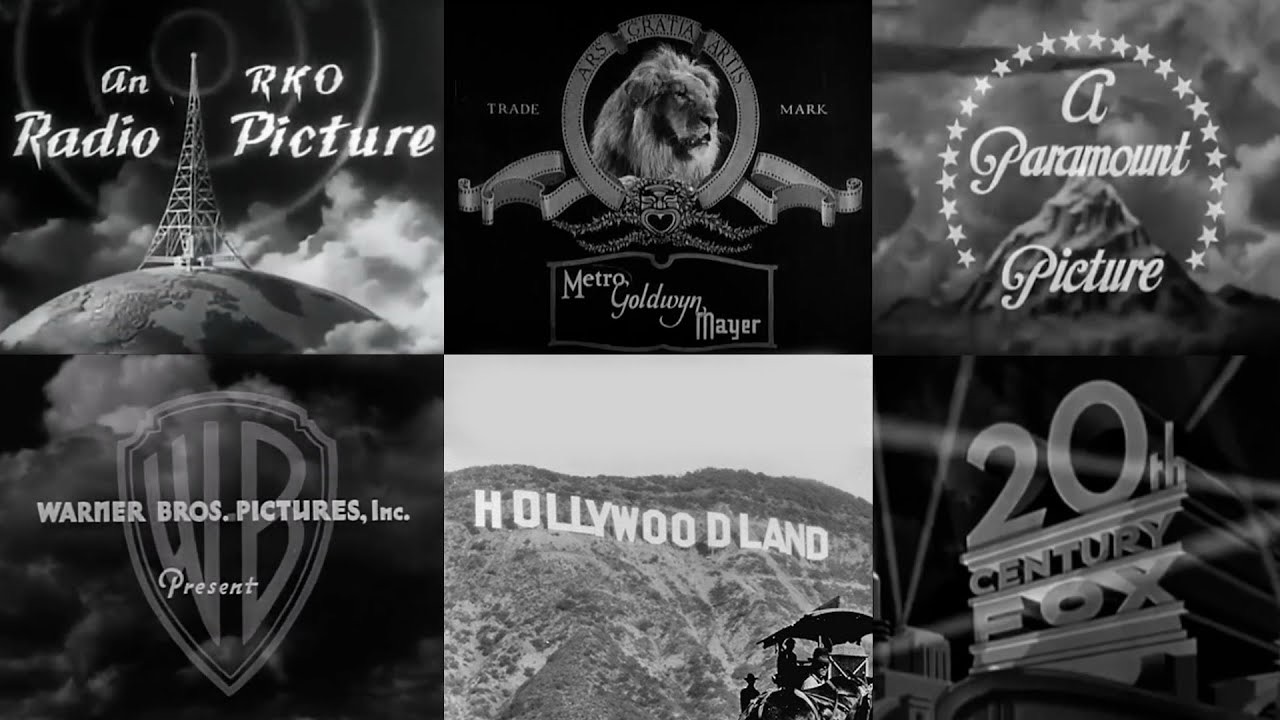
The three smaller companies, which
did not own theaters, developed different strategies. While United Artists
limited its annual production to a few dozen A-list films, Columbia and
Universal adapted to low-budget, low-risk films. Thus, a new and important
category emerged in the 1930s known as "B-movies."
During the Great Depression, one
practice developed to attract audiences back to theaters was the simultaneous
release of two feature films. After the widespread use of two-film releases,
companies could no longer afford to release their films for a year.
The five Big Five controlled the
premiere theaters, and the other studios lacked the financial resources to
produce premieres. Therefore, smaller studios focused primarily on producing a
large number of B-movies. These films were intended for theatrical releases and
to fill the gaps between new releases and their theatrical debuts.
In 1938, the Department of Justice
launched a long series of lawsuits that would continue for more than a decade
against the monopolistic practices of all the major film companies. This series
of cases is collectively referred to as the Paramount Case (De Vany, 2006:
178-179). In response to these lawsuits, the major companies signed a
self-imposed settlement in 1940.
This settlement aimed to loosen the
companies' strict monopolistic practices and prevent the formation of a monopoly. The
disintegration of the Hollywood studio system became evident after World War
II, and one factor that contributed to its collapse was the widespread adoption
of television as an entertainment medium. Faced with declining audience
numbers, the companies initially tried to capitalize on technological
innovations. In 1952, 3D briefly became popular, but it was not successful due to the complexity of 3D effects and the inconvenience of the special glasses required for the audience.