Cinema has had many pioneering figures, such as Méliès,
Edwin S. Porter, and David Wark Griffith, the first master of cinema.
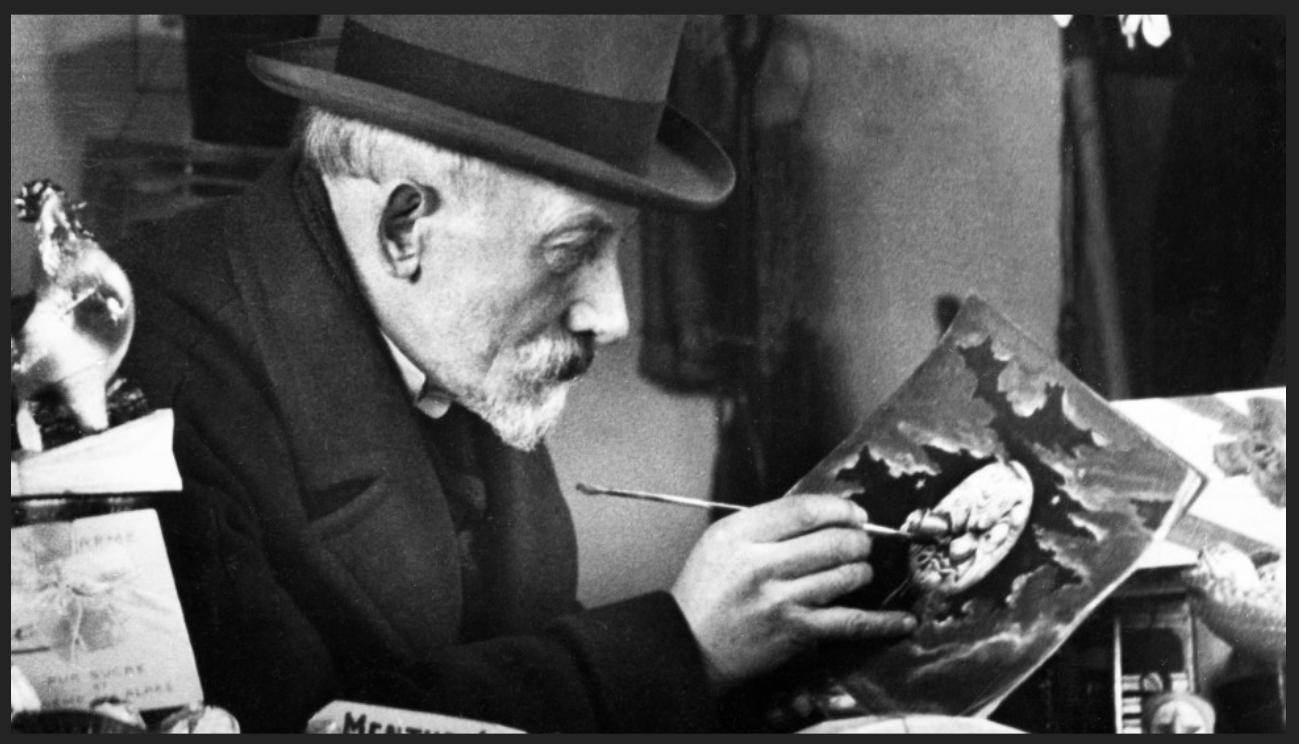
Georges Méliès
Méliès was a master illusionist. By 1900, despite the rapid
spread of theaters and growing audiences, there was still no complete
confidence in cinema's future. Born in 1861 to a wealthy family, Méliès became
interested in illusion in London in 1884, where he dedicated himself to the
craft.
Méliès soon established his first studio in France. One day, while filming in the Place de l'Opéra in Paris, his camera suddenly malfunctioned and stopped. But when he restarted it, the camera continued to record, and when he reviewed the footage, he saw a woman suddenly transform into a man, and a bus turn into a hearse. Thus, he discovered, albeit accidentally, the supernatural power of moving images. In a short time, he developed techniques such as superimposition, still images, fast and slow motion, fades, invisibility, and reverse motion. Méliès is considered the father of science fiction cinema because of his seminal film, *A Trip to the Moon*, which he filmed in 1902. This film, inspired by Jules Verne's novel, became a parody.
Edwin Stanton Porter
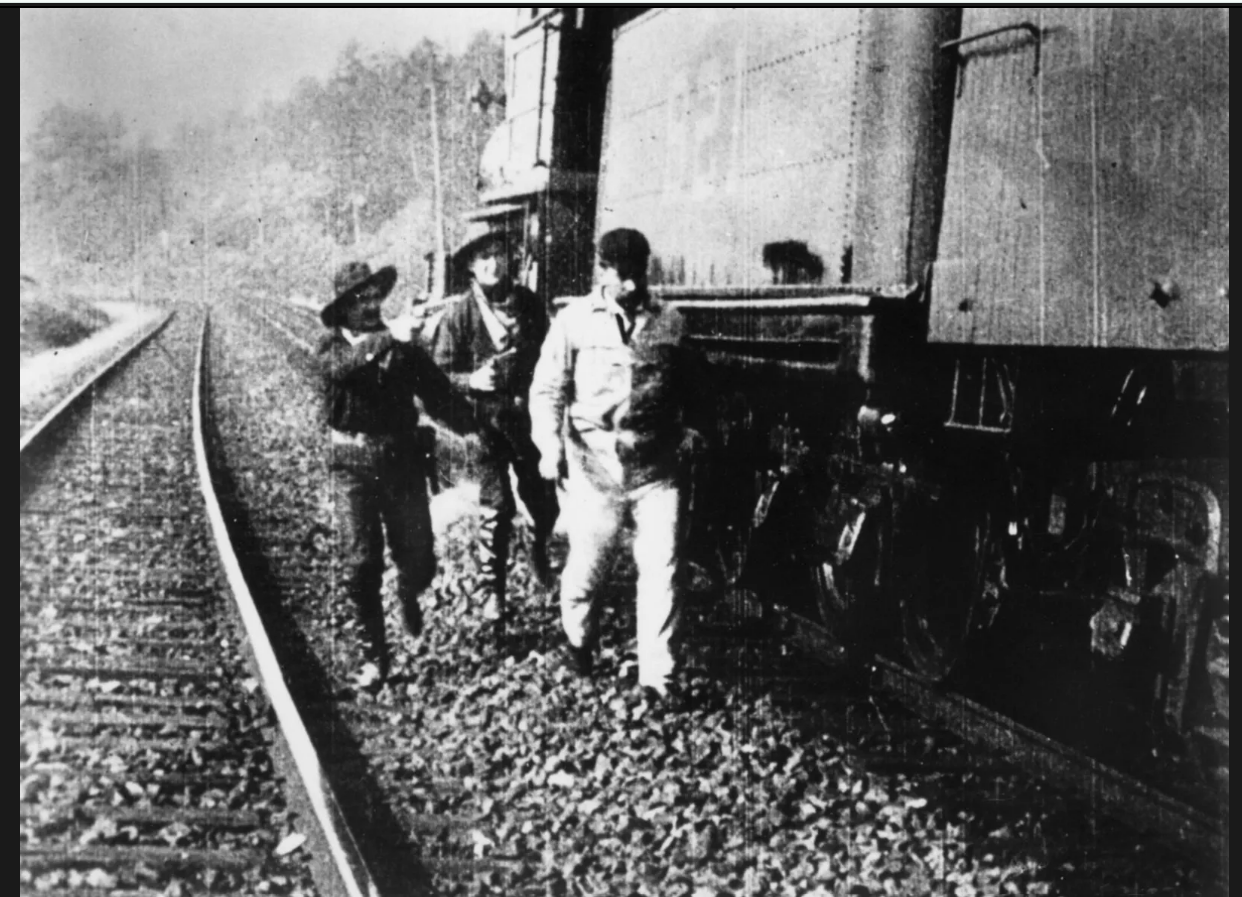
Porter is considered the inventor of the narrative editing
technique for film, which is one of the foundations of film art. Drawing on the
possibilities of theater, much like Mellis, Porter created a fantastical yet
realistic world in his films. His efforts to depict real events with the aid of
imagination expanded the scope of cinema and established film technique. Based
on Porter's causal relationship and linear chronology, advanced examples of
parallel narrative were included.
The First Teacher of Cinema: David Wark Griffith
Griffith undertook a process that led to his and cinema's
acceptance by the public. He helped take cinema and the phenomenon of
moviegoing seriously, questioning cinema's relationship with the audience
through his films. Griffith's company provided the first examples of "film
noir" and psychological thrillers with Mutual Escape (1915) and The
Avenging Conscience (1915).
He introduced The Birth of a Nation (1915). This
twelve-reel, three-hour film, based on a novel, influenced the narrative stance
in American cinema for at least the next six years.
The Birth of a Nation (1915), which attracted an incredible number of viewers despite high admission fees, grossed approximately $50 million. The film's production cost was only $100,000. Although the film is not as racist as the novel, it is prejudiced enough to justify attacks by Black people on theaters where it was shown. The scene depicting the assassination of Abraham Lincoln in "The Birth of a Nation" is a prime example of Griffith's rapid editing. Soviet filmmakers undoubtedly owe a great deal to Griffith, particularly in the realm of montage. Griffith was one of the key figures who helped establish cinema as a tool capable of conveying meaning (the "what" and "how"), especially in the United States at that time. Films began to rely on the audience's emotional engagement within the imaginary worlds they created. In this way, Griffith crafted films that audiences enjoyed, were thrilled by, or offered a brief escape from reality. As a brilliant cinematographer, Griffith made montage, lighting, and stagecraft more accessible and helped transform them into viable practices within the industry.