THE CINEMA is a gigantic industry with a political economy, from its first production, distribution, and display, in which motion pictures with social functions are recorded and reproduced. It is also an art form, a form of narrative and meaning creation.
It is necessary to mention many scientific contributions that paved the way for the discovery of cinematography.
Magic Lantern and The Dark Box
The invention of cinematography basically emerged from the idea that the eye perceives successive images as a whole. In other words, it has been understood that the eye is incapable of following the rapid changes in brightness of the thing viewed. Thus, it has been understood that the visual images flowing one after another hang on top of each other, creating an impression of movement by integrating in the mind. However, such devices enabled a one-person viewing experience. Therefore, the shadow of the motion had to be cast on a surface to make the motion picture a plural viewing experience. Here, the seventeenth-century "magic lantern" (Magic lantern) provided the solution to this problem.
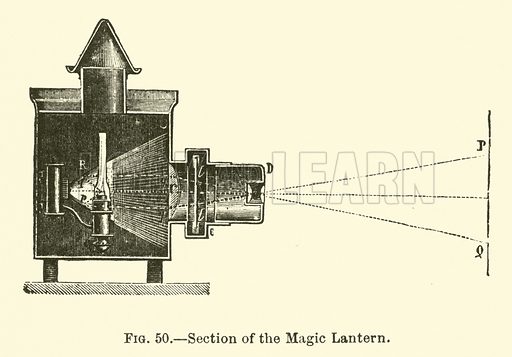
Before moving on to the development of film and photography, it was necessary to address the problem of objects or images on sensitive surfaces. Here, the "dark box" (camera obscura) came to the rescue. The dark box could be projected onto the wall through a very small hole drilled in one of its surfaces, but the image would be upside down.
To ensure the permanence of an object's image through the camera, which is a mathematically developed form of the dark box, the rays reflected from the object had to pass through a transparent medium and be projected onto a light-sensitive surface. This surface, on the other hand, had to have a certain chemical character. Indeed, silver nitrate has been proven to record light and shadow. In 1819, Herschel discovered that silver salts dissolved in hyposulfite. Thus, first, a positive image was obtained, and then a positive print was made from the negative. As a result of these developments, Joseph Nicephore Niépce became the first person to produce a photograph in
1822, and in 1841, he reduced the exposure time for a photo shoot to three minutes. Image source
First Films
The Lumière brothers held private demonstrations in Paris in 1895. Although it made little noise at first, interest in the shows increased over time. The films made by the Lumière brothers in 1895 were well-edited, single-frame still shots with a fresh and free air. Among these, "Bahçivan's Watering" and "A Train's Entrance to the Station" are the most well-known. Coming off a train at the station, moviegoers, influenced by the movies, thought the train was coming at them and fled.
The Early Years of Cinema
In the 1900s, many people in many countries around the world became cinema enthusiasts. However, the event that resulted in the burning of more than 100 members of the middle class due to the fire that broke out during a demonstration in a market in France in 1897 caused the cinema to be accepted as an entertainment tool that appealed to the lower segments of society for a certain period of time.
After Edison patented the cinema device in the USA, several new patent holders entered the market. During this period, the cinema developed rapidly, encompassing the stages of shooting, screening, and distribution. With rapid development, pirated broadcasts began spreading across the country.
The First Movie Theaters
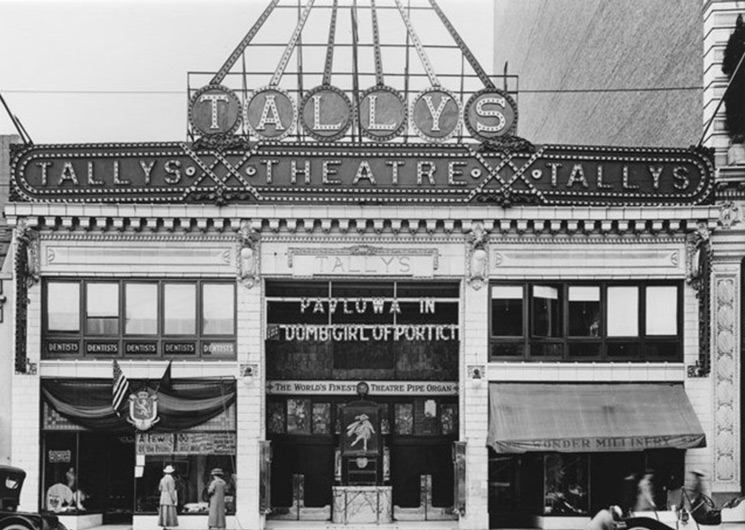
A pawn was accompanying the performances in nickelodeons, which took their name from the coin paid at the entrance, and where nearly two hundred people sat on stools and watched movies.
By 1914, large, ostentatious halls with seating capacities exceeding 1,000 began to appear in most big cities. Cinema began to represent a new standard of living, with its luxury halls and services. The Hollywood studio system, which reached its heyday in the 1920s and 1930s, is defined by monopolies that exercise horizontal and vertical control over production, distribution, and exhibition. However, this process has been the scene of a series of patent and license fights.
In the early 1900s, while cinema developed as a breakthrough in the USA and as a craft in England, it emerged as a real industry in France. France acted before the USA in developing the movie industry; Charles Pathe played the biggest role. He quickly expanded the Pathé Brothers company, which he had founded with his brothers, and began film production. Having built a large studio in Vincennes, the company soon began producing two films a day.
This quickly made it the number-one single-film production company in France. Returning to the Pathé Empire in 1903-1909, the company dominated the global cinema industry. However, the company's heyday ended with the First World War. lost its dominance in world cinema to American companies.